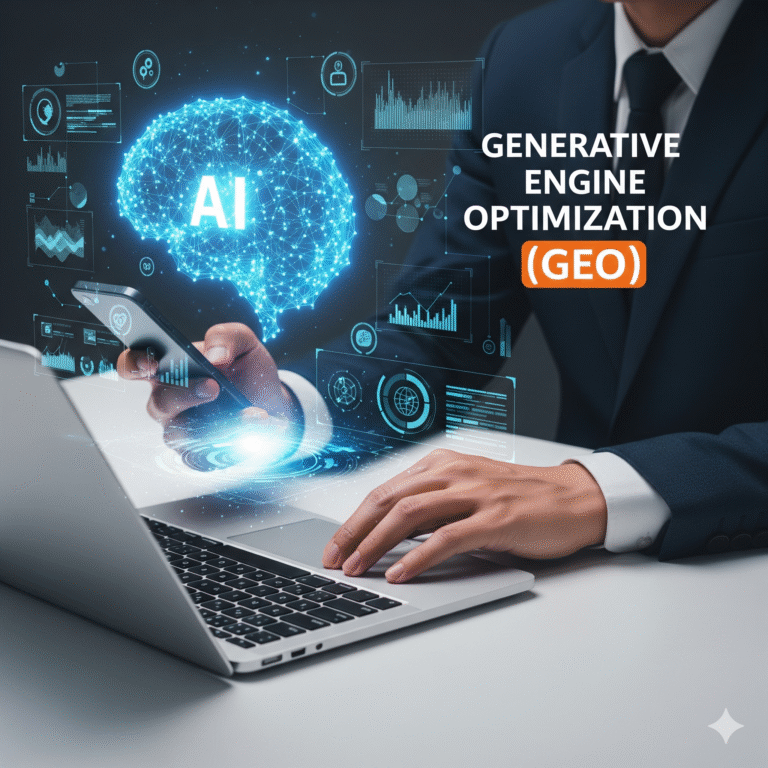
Online information search is changing fast. The gold standard for increasing website traffic was search engine optimization. Generative AI brought us generative engine optimization, or GEO. Discover the key differences between SEO and GEO, and learn how to adapt your business to the ever-changing digital landscape.
Finding what you need with Generative AI
An increasing number of people are using generative AI platforms like Chat GPT, Perplexity, and Google AI. Consumers are engaged in a conversational, genuine dialogue. They provide direct answers, summaries, and insights, not just links, so users can find what they need quickly.
Artificial intelligence is powering a lot of search engines. In November 2022, Chat GPT introduced a new conversational AI model. After a month, Perplexity fixed some problems with Chat GPT’s sourcing with citations. A few of the models have been updated in 2023, like Claude and Llama. A hybrid approach to web search will be launched by Search GPT in 2024.
Why is SEO different from GEO?
Both SEO and GEO aim to make your content more discoverable, even if their approaches are different:
A search engine optimization (SEO) strategy helps your content rank better in search engines.
The term Generational Engine Optimization is abbreviated as GEO.With GEO, AI-generated answers will always include your brand name.Your brand may show up in relevant search results if you train AI to recognize it.Key geographic metrics include brand awareness, AI response visibility, and AI platform influence.
How to Improve GEO
You need to change your approach to SEO when optimizing for geo-specific locations. You should pay attention to this:
Create Strategic Content: Your website is now a training resource for AI models, not just a destination for customers. Your content should not only describe your offerings, but also address complex questions.
Structured data, such as schema markup, is easier for AI systems to understand than unstructured data. AI can find and index your content more easily when it is structured.
Backlinks and keyword rankings influence SEO authority. GEO’s AI models assess authority differently. Position your brand as a recognized expert in specific industries or topics.
AI models track how users interact with your content, providing insights to improve the user experience. If visitors from AI overviews engage with your site and find value, AI will more likely promote your content.
Using different AI models to their fullest
You need to adapt your strategy to each AI model because they all work in their own way.
Google AI Overviews: These still examine traditional SEO metrics, but also consider additional factors. To optimize your content for Google AI, ensure it is well-organized and that you answer questions in a manner that sounds conversational.
Chat GPT prioritizes contextual relevance and the biases present in its training data. To leverage Chat GPT, develop comprehensive content covering a broad array of topics your audience seeks.
Perplexity: This model also places a significant emphasis on contextual relevance, but it also benefits from real-time search data. Our research shows that Perplexity prefers niche, specialized content over general information.
How to Make Sure Your Plan Will Work in the Future.
GEO complements SEO rather than replacing it. Companies must coordinate both approaches. Traditional SEO remains essential for driving traffic, while GEO is crucial for enhancing your brand’s presence in AI-generated answers.
Generative engine optimization is the future of digital marketing. These approaches enable businesses to adapt and excel in the AI-driven search era. Success now requires more than rankings and keywords—you must encourage AI to mention your brand and foster stronger connections with Generative AI: A New Way to Look for Things.
People are turning to generative AI tools like Chat GPT, Perplexity, and Google AI for answers. These systems engage users with conversational, natural dialogue. Instead of offering just links, they provide direct answers, summaries, and insights that help users quickly pinpoint the information they need.